Showing posts with label Book Review. Show all posts

Tuesday, January 03, 2023

The Nine Tailors by Dorothy L. Sayers


The Nine Tailors (Lord Peter Wimsey)The Nine Tailors by Dorothy L. Sayers
My rating: 5 of 5 stars

Update: 1/3/2 It was even better reading it a second time. Most good books are. I rarely give 5 stars (to authors whose works I review; it's nothing personal), but this one deserves it. Few books I read have to capacity to shape me as I read them. This one does.
Previous review: (slightly updated)
"So I think I'd better go, said Wimsey. "I rather wish I hadn't come buttin' into this. Some things may be better left alone, don't you think? My sympathies are all in the wrong place and I don't like it. I know all about not doing evil that good may come. It's doin' good that evil may come that is so embarrassin'."
"My dear boy," said the Rector, "it does not do for us to take too much thought for the morrow. It is better to follow the truth and leave the results in the hand of God. He can forsee where we cannot, because He knows all the facts."
With this quote, I understood why Sayers designed such an "easy" mystery and placed it on my re-read list.

Thursday, July 07, 2022

Persuasion -- once more


PersuasionPersuasion by Jane Austen
My rating: 5 of 5 stars

Listened to the audio version for the first time. I've read this multiple times and know the story well. Re-reading, or in this case listening to, a well-told story is always a pleasure. With the plot firmly in mind, I can focus on the details with more attention. Inevitably this brings greater insight and delight.

View all my reviews

Monday, November 29, 2021

The Big Year: A Tale of Man, Nature, and Fowl Obsession


The Big Year: A Tale of Man, Nature, and Fowl ObsessionThe Big Year: A Tale of Man, Nature, and Fowl Obsession by Mark Obmascik
My rating: 3 of 5 stars

After watching the movie, I wanted to know more about the Big Year competition. The author does a respectable job of provided background both on birding and the three men the movie is based on. I really enjoyed the historical background, development of birding, and about birding in general. But about halfway through the book, I began to grow weary of the excesses, and wondered why we as a society, and some of us, feel a need to turn an enjoyable venture in to a die-hard competition. The author gives us insight into what drove these three men and, inadvertently, encouraged me to be a better birder to see what I'm missing in my area, but no need to be competitive.

#birding #bookreview   

View all my reviews

Friday, June 11, 2021

Aeschylus I Review

Aeschylus I: Oresteia (Agamemnon, The Libation Bearers, The Eumenides)Aeschylus I: Oresteia by Aeschylus
My rating: 4 of 5 stars

I read this with a reading group formed by the Catherine Project the brainchild of Zena Hitz, author of Lost in Thought. I'm probably the oldest in the group and have thoroughly enjoyed reading and discussing these plays with this group. As far as the text, it is a classic for a reason. We discussed various topics including justice, motivations for justice, hatred, revenge, vengeance, etc.

View all my reviews

Monday, February 01, 2021

Book Review- Turning of Days by Hannah Anderson


Turning of Days: Lessons from Nature, Season, and SpiritTurning of Days: Lessons from Nature, Season, and Spirit by Hannah Anderson
My rating: 4 of 5 stars

Thomas Henry Huxley wrote, “To a person uninstructed in natural history, his country or seaside stroll is a walk through a gallery filled with wonderful works of art nine-tenths of which have their faces turned to the wall.” An all too true statement about most of us, excepting children whose innate curiosity beckons them to run around to peer into the artworks’ faces. Fortunately for the rest of us, Hannah Anderson and her husband Nathan, illustrator of her new book, Turning of Days: Lessons from Nature, Season, and Spirit stand in the gap between nature and nature’s God pointing us to both. They offer seasonal lessons of what it looks like to turn our faces to the works of goodness, beauty and truth in nature given to us by our Creator and reveal more about Him and ourselves than we are aware.
This collection of essays of her observations of nature and theological connections is ordered around the seasons. You will learn about spring peepers, pruning, and hawks’ migration habits. You will read of God’s providence, memento mori, and kronos, the fulfillment of time. You will see detail illustrations showing the same attentiveness.
In an online conversation with Hannah, she writes that she and Nathan have “shared a particular disposition or awareness of [the] natural world.” I share this disposition due in large part to spending much of my childhood exploring the woodlands, creeks, and streams that bordered my home and to a church that offered me a chance to read and learn much of the Bible. The connections come somewhat naturally when you watch a hawk soaring over an open field and then read in Scripture about “rising up on eagles wings”. Fortunately for us throughout the book she models for us how to learn more about what we see and to read the Bible with those observations in mind. In a final essay she gives suggestions how to place our ourselves, so our attention is directed to observe nature well. We will not learn this disposition if we will not place ourselves as creature among creation willing to submit to its teaching.

I received a copy of the book for an honest review.

View all my reviews

Friday, January 22, 2021

Prayer in the Night

Prayer in the Night: For Those Who Work or Watch or WeepPrayer in the Night: For Those Who Work or Watch or Weep by Tish Harrison Warren


“What I most love about this line—’and give hour angels charge over those who sleep’—is that it pulls together supernatural cosmic strangeness and the most quotidian of human activities: sleeping.” With that, and other carefully chosen words, Tish Harrison Warren proves once again in Prayer in the Night that she is a master of revealing glimpses of how our lives in the temporal sphere meet the eternal one.
In her opening note she tells us that wisdom is a “slow work”, and it is. Painfully so at various times and in various relationships in our lives. To guide us through this slow work, she walks us through the Prayer at Compline in The Book of Common Prayer:

Keep watch, dear Lord, with those who work, or watch,
or weep this night, and give your angels charge over
those who sleep. Tend the sick, Lord Christ; give rest to
the weary, bless the dying, soothe the suffering, pity the
afflicted, shield the joyous; and all for your love's sake.
Amen.

She helps us to see how prayer and faith are related; “Faith, I’ve come to believe, is more craft than feeling. And prayer is our chief practice in the craft.” With each phrase or word of the prayer, she reminds us to whom we pray, of his goodness toward those for whom we pray, including ourselves, and our work that proceeds from this prayer. Works of belief, rest, struggle, as well as justice and mercy.

I could have, and practically did, underline the entire chapter, “Shield the Joyous”. I tend to see the dark and twisty side of life too easily. I practice pessimism as naturally as a child is afraid of the dark. To petition my Creator to “shield the joyous”, feels foreign to me. The other shoe always seems to drop and who am I to get out of its way. But I miss the mark when I practice my faith this way. I miss “intentionally and habitually open[ing] [my]self to God’s unconditional love…and practice living in the reality that his love is deeper and more substantial than any need we could present to God.” The practice of joy and asking for it to be shielded “is a vulnerable and courageous choice.” It is the slow work of wisdom. Warren reminds me not only who I am, His Beloved, and that I can pray this petition, but the loving Father of whom I am asking.

As with Liturgy of the Ordinary, Prayer in the Night is a book to be read both in one gulp and then re-read slowly, thoughtfully and practiced. This is the first book I’ve read in 2021. I look forward to re-reading this throughout the year with pen and notebook in hand.

I received an ARC from the publisher.


View all my reviews

Thursday, December 31, 2020

Jesus the Great Philosopher: Rediscovering the Wisdom Needed for the Good Life


I saved the best for last. In the last days of 2020, I began reading Jesus the Great Philosopher: Rediscovering the Wisdom Needed for the Good Life by Dr. Jonathan Pennington, Associate Professor of New Testament Interpretation and Director of Research Doctoral Studies at Southern Baptist Theological Seminary. This is a book I have wanted to read since the Fall of 1979 when I took Philosophy 101 at a small Christian college in Nashville, TN. I loved the class and the professor, but never knew how to connect my love of philosophy with living. After all, I had the Bible, right? Never mind trying to meld philosophy and theology. This was an error on my part because my philosophy professor was also a systematic theologian and the one who wrote the systematic theology for our denomination. He was also my advisor and would have gladly helped me to understand. Thankfully, Dr. Pennington filled that role.

In Jesus the Great Philosopher: Rediscovering the Wisdom Needed for the Good Life, Dr. Pennington explains what philosophy is, what philosophers do, and how that has changed over the centuries. He also shows philosophical ideas of the Bible, and how and why early Christians would have considered Jesus a philosopher. The remainder of the book covers topics of life ancient philosophers would have taught and encouraged their followers to learn and to live out: educating emotions, restoring relationships, happiness, and human flourishing. He then discusses these topics in philosophical light of what the Christian Bible, and specifically Jesus Christ taught.

One of the most helpful aspects of this structure, and the entire book, is to reveal to us where some of our philosophies and practices of life originated and how they pervade our thinking and living without our conscious acknowledgement. More helpful is his explanations of how Christianity, rightly understood, can correct our thinking and practices.

The key theme, and I would argue its most important, throughout the book is living in hope, but not “baptized optimism.” “Hope is a virtue to be cultivated. Hope is a virtue of the will that can teach us to embrace both hardships and joys, because it is more than a mere emotion.” Pennington uses the topics above to express why and how we can cultivate this hope and why it is necessary.

Clearly this is a book for our times. 2020 has tested the best in and of us and in some ways, we have been found wanting. I wish the book had been available earlier in the year, but faith in God’s timing is well placed and as Dr. Pennington explains having faith is to hope.

While this is my last book of 2020 to read, it will go with me into 2021 as I re-read it. He answered my question about how philosophy, theology and living work together, but more importantly specific questions this book raised will be answered more slowly as I examine my own life and cultivate hope.

This is the one book for 2020 that I can recommend heartily and will be giving away to others.

I received an ARC of this book from the publisher.

Monday, February 03, 2020

Handle with Care: How Jesus Redeems the Power of Touch in Life and MinistryHandle with Care: How Jesus Redeems the Power of Touch in Life and Ministry by Lore Ferguson Wilbert
My rating: 4 of 5 stars

In Handle with Care, Lore has written a helpful introduction to what essentially is a theology of touch. She offers us a well-reasoned and well-written book inviting us to re-consider the implications of past ideas and practices regarding touch by closely examining the practices of Jesus as he interacted with those around him.
By providing historical background, which includes the “me, too” and purity culture movements, offering categories of touch, which include definitions of healthy and unhealthy platonic, sexual , and professional touch, she sets the context for the remainder of the book. While offering few specifics and rules, she does offer two concepts that undergird her thesis. First, we are to consider the person in front of us and second, we need to see others as subjects of the kingdom, not objects of our worship. Although the latter was specific to her discussion of marriage, this very helpful framework is throughout the book.
As is sometimes the case, I happened on an example of what Lore writes about Handle with Care in the recent movie adaptation of Little Women. Throughout this movie, Greta Gerwig and the actors provide scene after scene of how touch is used to show affection, provide comfort, serve, fight, create and more. I finished the book a few days before seeing the movie. Each enhanced my understanding of the other.
I will gladly and without reservation recommend this book to many of my friends. I can see how it concepts could be helpful to many in healthcare, education, and church professions. But more so, I hope that we all reconsider how we use touch and be willing to examine and change our practices with our friends and family.


I received an Advanced Reader's Copy of the book from the publisher.


View all my reviews

Handle with Care

In Handle with Care, Lore has written a helpful introduction to what essentially is a theology of touch.   She offers us a well-reasoned and well-written book inviting us to re-consider the implications of past ideas and practices regarding touch by closely examining the practices of Jesus as he interacted with those around him. 

By providing historical background, which includes the “me, too” and purity culture movements, offering categories of touch, which include definitions of healthy and unhealthy platonic, sexual , and profession touch, she sets the context for the remainder of the book. While offering few specifics and rules, she does offer two concepts that undergird her thesis. First, we are to consider the person in front of us and second, we need to see others as subjects of the kingdom, not objects of our worship. Although the latter was specific to her discussion of marriage, this very helpful framework is throughout the book. 

As is sometimes the case, I happened on an example of what Lore writes about Handle with Care in the recent movie adaptation of Little Women. Throughout this movie, Greta Gerwig and the actors provide scene after scene of how touch is used to show affection, provide comfort, serve, fight, create and more. I finished the book a few days before seeing the movie. Each enhanced my understanding of the other. 

I will gladly and without reservation recommend this book to many of my friends. I can see how it concepts could be helpful to many in healthcare, education, and church professions. But more so, I hope that we all reconsider how we use touch and be willing to examine and change our practices with our friends and family. 

Thursday, December 21, 2017

Loose strings and tight knots

The year is coming to a close and I am tying up a few loose strings and untying a few knots. One loose string is posting my reviews of some of the books I have read this year. So here are a fair number of them. As I look over this list, two stand out. Liturgy of the Ordinary: Sacred Practices in Everyday Life and Hidden Figures: The American Dream and the Untold Story of the Black Women Mathematicians Who Helped Win the Space Race. 

I plan to use Liturgy of the Ordinary, along with a few other sources, to set up practices and disciplines that I hope will help me in attending to my faith in a more consistent pattern which I hope will begin to develop practices I can use throughout my life to shape my life and faith and remind me of the very Good God, who loves me.

Hidden Figures. What an incredibly inspiring book to read at this time in history. Women who took advantage of every opportunity, dealt with racial and gender discrimination with character, poise, and determination, and did it all while enjoy and appreciating the good that life has to offer. A lesson I hope to take with me into this new year and use as wisely as they did.

I would be interested in hearing what others have read this year and what you would recommend as well.

  
A Grief Observed

Listened to this while driving during a trip. Lewis, honest and raw, shows us the value of wrestling with doubts, fears, and overwhelming emotions that threaten to sink us at times. While a book primarily about his grief from losing his wife, I found parts of it invaluable in dealing with other losses. Narrator is Ralph Cosham.


A Christmas Carol
This is the edition that I listened to this year. Well done!


To Be Where You Are (Mitford Years #14)

The title says it all. Be all in where you are, with those you are with. No flash, no spin, just live the quiet life with joy.


The Tech-Wise Family: Everyday Steps for Putting Technology in Its Proper Place

Finished this awhile back. What I appreciate most about Andy Crouch's writings is his ability to frame questions about the issues of the time we live in. Asking the proper questions, and knowing how to do that, is crucial to our ability to then think well about those issues. He does so in this his latest work and I found myself making some changes to how I approach and use technology. It was also a pleasure to attend his talk on this subject in my local city. His fleshing out (literally...we participated in some of the activities presented in the book) added to the book and I do wish he would continue to present in that manner.

The Grace of Dogs: A Boy, a Black Lab, and a Father's Search for the Canine Soul

Thoughtful, engaging book on the shaping influence relationships with dogs can have on their owners. I could see better how my dog, Samwise, has shaped me for the better because of his patient faithfulness to me.
Update: after entering quotes into my commonplace book, I realize this book, in many ways, is also a theological anthropology. He presents a view of man and his ways of relating based in imago Dei. Setting aside the book for a short time before I entered quotes allowed me to realize how subtly this book has challenged me to examine beliefs that I truly hold to that may or may not be rooted in a sound theology or that I thought I held to but in practice have failed miserable. This has been both a pleasant surprise and a rude awakening.
The Confusion of Languages

More to come later. This is a remarkable book on several levels. Her characters are well portrayed, especially their interior life. Her exploration of how our thoughts can provide motivation for our emotions and actions, and vice versa, the way language (especially defintions) can influence those, and the enormous effort it takes to recognize it all has left me mulling over this work.
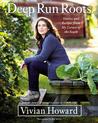


Deep Run Roots: Stories and Recipes from My Corner of the South

After watching a few of her episodes of A Chef's Life, I borrowed her cookbook from the library. She is a storyteller. I enjoyed reading more of her experiences as she came to enjoy and appreciate her East Carolina roots, food, family, and traditions. Gathered recipes to try and continued to enjoy this twist on cookbooks that serve up good food and incorporate storytelling in the mix.
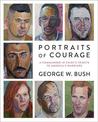

Portraits of Courage: A Commander in Chief's Tribute to America's Warriors

This is a remarkable book. President George W. Bush fills this book with portraits he painted of wounded veterans from Iraq and Afghanistan wars. He highlights the individual stories of those soldiers included in the book using his plain-spoken style and occasional dry wit he is known for. One more note, many of those whose stories are include here speak of their healing being a life-long journey they have embraced. Most cite the love of family, faith, medical care, and exercise as key components in their recovery. And as the author mentions several times the soldiers courage played no small part as well. Think this will be my Dad's Birthday present this year.

How to Hygge: The Nordic Secrets to a Happy Life

I read this out of curiosity about the trend of hygge. An interesting peek into Nordic lifestyle. However, from this author's representation, nothing that I haven't read before from Charlotte Mason, Edith Schaeffer, Amish officiandos, etc. At the core is a lifestyle centered around keeping simple the activities of nature and outdoor living , food and hospitality, family and friends with an eye to enjoyment of the good gifts of life.
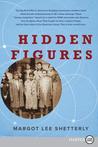

Hidden Figures: The American Dream and the Untold Story of the Black Women Mathematicians Who Helped Win the Space Race

As someone who grew up during the early stages of the space race, I was enamored with all things NASA. So much so that the first thing that I ever earned money for was a book produced by the Gulf Oil company about the Apollo 13 space mission. I remember going with my dad to get the book from Bubba McCoy's gas station one morning before school and it was worth every penny. I wonder what happened to that book. So it's no surprise that I enjoyed this well-written, well-researched account of the role of African American women in NACA AND NASA. It was captivating. The author writes in the style of David McCullough and easily kept my interest. These women succeeded facing all manner of prejudices and other odds against them not just because of their intelligence and tenacity but due to a sense of accomplishing something bigger than themselves. And they loved mathematics, who would argue with that?
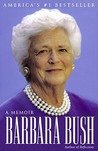
Barbara Bush: A Memoir

I loved reading her memories and thoughts about so much of the history that I remember. She is a remarkable woman who clearly loved and served with all she has. This was the third year in a row that I read about the Bush family and this coming year will be no exception. Decision Points by her son is waiting in the stacks for the 2018 New Year's Day.


Liturgy of the Ordinary: Sacred Practices in Everyday Life

This will easily be one of my top 5 books of the year. A much needed, well written apology and description of the ways liturgy can shape us as the people of God if given both the mental and willful assent that we often subconsciously give to the other habits. Recommended by James K. A. Smith, whose _You Are What You Love_ and Cultural Liturgies trilogy I hope to finish this year.


The Girl with Seven Names: A North Korean Defector’s Story

Thanks to the audio version, traveling and cleaning this week were not tedious and I was able to finish this quickly. The story and narrator easily kept my interest. She tells her story with an eye to both the beauty and corruption of human nature. Her's is a story of perseverance. more to come later


The Lord of the Rings (The Lord of the Rings, #1-3)

This is a yearly re-read for me. I can take it slow and enjoy the writing, which is satisfying.


Tuesday, July 18, 2017


Hope Heals: A True Story of Overwhelming Loss and an Overcoming Love


Hope Heals: A True Story of Overwhelming Loss and an Overcoming Love by Katherine Wolf
My rating: 3 of 5 stars

A poignant tale from a couple who have faced great suffering and have learned to walk in it because of the faith and trust they have chosen to place in God who wounds and gives life out of that suffering. Highly recommended.

View all my reviews

Wednesday, May 20, 2015

Nine Tailors by Dorothy Sayers

The Nine TailorsThe Nine Tailors by Dorothy L. Sayers
My rating: 5 of 5 stars

“So I think I'd better go, said Wimsey. "I rather wish I hadn't come buttin' into this. Some things may be better left alone, don't you think? My sympathies are all in the wrong place and I don't like it. I know all about not doing evil tha good may come. I'ts doin' good that evil may come that is so embarrassin'."
"My dear boy," said the Rector, "it does not do for us to take too much thought for the morrow. It is better to follow the truth and leave the results in the hand of God. He can forsee where we cannot, because He knows all the facts.”


It was with this quote that I understood why Sayers designed such an "easy" mystery and places this book on my re-read list. I knew fairly early on the identity of the corpse, but continued reading to see why she would craft the story so and to see where she was taking me.  She took me to a community that cares for its own, and to the church that stands high on a hill, whose ringing bells bring joy, comfort, and alarm in times of need. This church provided shelter during a flood and ensuing tragedy which occurs when warnings are ignored. I hear clearly echoes of the Old Testament story of Noah. In all of this, by crafting several sub-plots, she asks me to consider that the ways of our Lord are indeed the mystery bringing both sorrow and joy, sometimes with a paradoxical comfort that comes from leaving "the results in the hand of God."  Masterly and subtly crafted, it is well worth re-reading.


View all my reviews

Thursday, July 05, 2012

Charlotte's Web


What does a fifty plus year old post-menopausal brain need as bedtime reading? Children's literature, of course. Taking C.S. Lewis at his word that “A children's story that can only be enjoyed by children is not a good children's story in the slightest”, I added children's stories to my bedside reading table, as there are times in life when even the most trivial adult or young adult novel would give me too much to consider and sleep would not come.
One of my recent favorites has been Charlotte's Web by E.B. White. While I started off reading, I soon switched to the the audio version read by the author himself. Perfection. A reader (listener) can know without a doubt what Mr. White wanted us to hear about life, death, friendship, living, and growing up and older by the gentle inflection of his voice. His impressions of the animals in the barnyard speaking is worth the price of the CD's alone. But don't take just my word for it, you can listen for yourself in the embedded audio below. And for those who simply can't wait you can purchase the audio from Audible and have it before bedtime tonight.

Monday, November 08, 2010

Review: Choosing to See

"Maria could write her name and little things such as 'I love you,' but she hadn't started writing other words yet. Since Stevey Joy was a little older and a year ahead of Maria in preschool, she had a list of words to learn. Steven's best guess is that Maria much have copied one of the words off the list. And the word she wrote was SEE.
SEE.
     Staring at Maria's artwork, Steven had tears spilling down his face. It was like Maria was speaking to him from heaven, from the very realm of  eternity, saying 'SEE? Can you SEE? Everything is going to be all right. I am here with Jesus. I am fine. Heaven is real, the gospel is true, you just have to SEE!'...I could only see a few feet in front of me. If I could see any farther than that, the journey ahead would be too scary . But He was showing me all that I needed, just a few steps at a time...giving me little glimmers of grace...if I would choose to SEE them."

 Steven Curtis and Mary Beth Chapman lost one of their precious daughters a few years ago and in Choosing to SEE: A Journey of Struggle and Hope, she takes us through the struggle that loss brought. Not a struggle of their choosing,  but one that they have been given to walk through and learn to see by.  Her ability to be honest allowed me to weep, laugh, and cheer her on, and to see how she lives with grief which has its foundation set on hope in Christ. As she writes, "Most people I know are quite fond of the apostle Paul, not because he was a super-achiever who spread the gospel throughout the known, world, but because he realized that his pains and limitations were what kept him dependent on Christ."   It is a gentle reminder that even without answers, and in the midst of pain,  we can live this life we've been given, that He has given us His people to surround and guide us, most of all the LORD is with us. It's a story of  how one parent's days are spent in learning to SEE and trust Him.

Sunday, June 22, 2008

Evangelism and the Early Church


If you want to read a great book on the how the human authors of the New Testament understood their culture and how the Gospel addressed that culture then please take time to read Evangelism and the Early Church by Michael Green. More thoughts:

A Personal Touch

In Evangelism in the Early Church Michael Green, a man who writes with a pastor’s heart and an intellectual’s mind, I have found a wonderful guide through the documentation of the first and second century Christian writers and through the philosophical and historical background of the two time periods.
As I have read and studied Ancient history and literature, I have had a strong curiosity to better understand exactly who and what the Gospel was speaking to and found that Green’s work gives a more than adequate understanding of the world into which Jesus came. Apart from that aspect of the book, I was delighted to find two other aspects of the book to be very instructive to my understanding of evangelism. The first aspect concerns the biblical basis of tailoring the gospel and the second addresses the concerns and needs of a more rural, less educated, audience.
Michael Green in the section titled Proclamation in the chapter The Evangel carefully lays out evidence from a variety of resources that the gospel has both “a recognizable shape and content”, but not so restrictive to “serve as a strait-jacket, inhibiting all imagination and initiative.” This vitally important section is helping me to see that the structure given is to be used to produce something that is stable but also applicable to the specific time, place and relationships where I find myself. Time, place and relationships that are examples of the outworking of the Lordship of Jesus in all of its infinite variety. It brings to bear that He is Lord over all times, peoples and place and that there is a freedom that comes from admitting that we never really can implement exactly the worship, evangelism, etc. of the past without falling into rituals that are devoid of a the relationship with Jesus Christ that they can represent. It also brings with it a responsibility to hear carefully what the people, both individually and collectively, are saying in order to know how to bring the gospel to them. And more importantly to remember that at whatever point they enter the kingdom, the Holy Spirit is faithful to continue the work.
I was especially delighted to find that Green addresses one of the more rural audiences of the Early Church and to find what I think are parallels to rural areas today. On page 174ff, Green lays out the following characteristics of the common man in the Hellenistic society that we find echoed today: disillusionment with the state cult is paralleled today with a disillusionment with politics of our time and also paralleled by the paying of taxes to prevent disaster on their house!; an affinity for the household and countryside gods, which could be seen as anything from hunting and fishing to hard work and even harder play; and a desire to show piety, which is commendable. But all of this makes for individuals who are very self-sufficient and fiercely independent and “covered with a thin veneer of Christianity” and thus as Green says these are resistant to the gospel to the last. Green’s exposition of the approach of reminding them that the God is the giver of those good things for which they work and play hard was instructive. But undergirding this, as Green emphasizes throughout the book, was the love, fellowship, and moral example of the ordinary Christian. A personal approach that is costly, but obviously effective.

Monday, May 19, 2008

Postmodernism


Richard Appignanesi and Christ Garratt’s Introducing Postmodernism, is probably the most difficult and frustrating book I have read. The concepts, to some extent, are foreign to me, a 47 year old white evangelical mother of two teenagers daughters and required what a good novel demands, a willingness to suspend disbelief until the author has had his say. All in all a good exercise for me- it pushed me to understand something outside of my usual purview and to dig deeper for the truths buried there. The underlying theme of postmodernism, or hypermodernism, as I believe it is most accurately labeled, is the Ideal of the Enlightenment/Modernity taken to its logical and natural conclusion. If Descartes’ first principle is “I think, therefore I am” then hypermodernity first principle is “I am”. Two parts of the book that illustrate this vividly for me were the four successive historic phases that representational image-sign (art) goes through as posited by Jean Baudrillard and it’s application to the development of the theory of Virtual Reality. Using various images of shoes as portrayed in history to illustrate how shoes have progressed from an object designed for work, our God-given task not incidentally, becomes an image product that becomes a substitute for the image of God that we are called to bear. This Virtual Reality, along with its driving forces of free market capital-fed consumerism and pathological bent toward disbelief predicated not on knowledge but deceit and fraud brings us to a point of where we begin “ the demolition of the past” in order to prepare for “the coming of the artificially engineered human”. We move from being the steward to producer to the consumer to becoming the product. And in doing so lose our humanity, all in the name of creating our own reality. This book did help me to understand much better C. S. Lewis’ prophetic warning of this predicament in his work Abolition of Man and in That Hideous Strength in which he masterfully clothes his prophecy. So we have arrived at this point isolated from one another and less human for a number of reasons not the least of which is a commitment to not cooperate with Reality. By trying to rip our lives from Reality we end up not with Nihilism but with Absurdity. We have, as far as we are capable, tried to create some reality that has no mooring due to an insistence on rejecting what has come before, both tradition and revelation. Which make the author’s suggestion of remedy for this loss of reality all the more ironic. They call for a return to romanticism, a movement that looked to man’s heightened experiences and elevation of nature’s healing balm to provide that mooring that is lost. Man’s answer to the virtually reality he has tried to create is to go back to an era of real experiences.
C. S. Lewis also gives us a better antidote to hypermodernity than a return to romanticism. He states of the Tao (First principle; general revelation), “as long as we remain within it, we find concrete reality in which to participate is to be truly human: the real common will and common reason of humanity alive, and growing like a tree, and branching out, as the situation varies into ever new beauties and dignities of application.” But make no mistake this Tao is not an abstraction; it is the very character of God as evidence in both the created universe and his chosen image bearers, man. And its fullest expression possible is seen when believers love one another and others in a self-sacrificial manner.
What has amazed me most about reading and thinking about this book is that I was able to learn from it. It was humbling to go from complete frustration with this book to having to admit that it did help me to see how others could view life and make choices. My oldest daughter tells me that, indeed, people her age are all about experience and knowing that helps me to be much more patient with their searching and more focused in ways to minister to them.