Showing posts with label Books. Show all posts

Tuesday, January 03, 2023

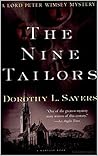
The Nine Tailors by Dorothy L. Sayers


The Nine Tailors (Lord Peter Wimsey)The Nine Tailors by Dorothy L. Sayers
My rating: 5 of 5 stars

Update: 1/3/2 It was even better reading it a second time. Most good books are. I rarely give 5 stars (to authors whose works I review; it's nothing personal), but this one deserves it. Few books I read have to capacity to shape me as I read them. This one does.
Previous review: (slightly updated)
"So I think I'd better go, said Wimsey. "I rather wish I hadn't come buttin' into this. Some things may be better left alone, don't you think? My sympathies are all in the wrong place and I don't like it. I know all about not doing evil that good may come. It's doin' good that evil may come that is so embarrassin'."
"My dear boy," said the Rector, "it does not do for us to take too much thought for the morrow. It is better to follow the truth and leave the results in the hand of God. He can forsee where we cannot, because He knows all the facts."
With this quote, I understood why Sayers designed such an "easy" mystery and placed it on my re-read list.

Thursday, July 07, 2022

Persuasion -- once more


PersuasionPersuasion by Jane Austen
My rating: 5 of 5 stars

Listened to the audio version for the first time. I've read this multiple times and know the story well. Re-reading, or in this case listening to, a well-told story is always a pleasure. With the plot firmly in mind, I can focus on the details with more attention. Inevitably this brings greater insight and delight.

View all my reviews

Thursday, March 24, 2022

Mr. Collins - not a role model

 I've long enjoyed Joy Clarkson's podcast Speaking with Joy. She consistently gives insightful commentary, book reviews, author interviews, and, my favorite, a series where she considers a topic through art, music, and reading. She has brought much joy and beauty into my life. I am a much happier, wiser, more fully human because she, and her sister, have brought joy and beauty to my life and, more importantly, taught me how and why I must look for and create joy and beauty. When she announced she was writing a book, Aggressively Happy: A Realist Guide's Guide to Believing in the Goodness of Life, I immediately pre-ordered it, knowing I would enjoy it. I've only had time to skim, and she delivers. There is much to gain for those of us with a melancholy nature. At the end of each chapter, she even included the elements I mentioned above of something to read, see, listen to, and ponder for each topic she takes up. I can easily recommend it. 

 One of Joy's gifts is asking us to consider or re-consider some of our long-held beliefs, deepening some, amending others, and discarding a few. For example, she convinced me thoroughly that some of the male characters of Jane Austen's novels needed to be held to a higher standard than some of us allowed, looking at you, Edward Ferrars and Edmund Bertram.

In Pride and Prejudice, she even seeks to rehabilitate our understanding of Mr. Collins, the Anglican priest and heir to Longbourn. You can read an excerpt here https://www.plough.com/en/topics/culture/literature/why-we-should-envy-mr-collins or, better yet, buy the book. 

In her defense of Mr. Collins and call to emulate him, she points out:


 ... for all his flaws, there is a simplicity to Mr. Collins that I admire and enjoy. He lives in a small and imperturbable world where all that matters is Fordyce’s sermons, the securement of a wife for the increase of his happiness, and the distinguished patronage of Lady Catherine de Bourgh. And while we’re all laughing at him, Mr. Collins lives in a state of domestic felicity, blessed with a stable life, a meaningful job, and excellent in-laws, satisfied with the choices he has made in life.


Mr. Collins, according to Joy, has developed the ability to enjoy his life, "...no joy too small to celebrate," regardless of circumstances. She believes he possesses contentment and contrasts him with Mr. Wickham, whose avarice is on full display . 

She contends that he attempted to do right by the Bennets in choosing Elizabeth to be his wife. Had she said yes, neither her sisters nor her mother would have needed to find another home as we see the Dashwoods do in Sense and Sensibility. Following Elizabeth's refusal, Mr. Collins moves on to Charlotte, Lizzy's best friend, in what Joy calls learning "to privately accept rejection in a way that feeds neither bitterness nor helplessness. " She sees him as someone who does "... not care too much of what other people think [of him]." 

I took time to consider her unique viewpoint. Joy does a wonderful job at describing the practice of contentment and its benefits, the role of personal dignity, and the need to live a quiet life, but I cannot see this illustrated in the life of Mr. Collins. I concluded that while Mr. Collins may be content, his contentment is not grown in the rich soil of humility and gratitude, but in the hubris he shows in his constant comparing of himself and his situation to others. There is simply too much evidence that Collins is a warning to us, not someone we should 'be like.'  While she contrasts Mr. Collins "contentment" and Mr. Wickham's avarice to make her point about Mr. Collins's practice of contentment, I think a study of the differences between Mr. Collins and Mr. Darcy produces a richer understanding of both men, especially of Mr. Collins as a warning, not as an emulation. This approach deepens the theme of contentment by seeing the humility required for genuine contentment. 

Let's start with the title of the book, Pride and Prejudice. Austen gives us an abundance of characters, not just the lead couple, who are stricken with both vices by nature and nurture. She brings up Mr. Darcy's lack of tact as one example of someone whose pride would make him annoying and selfish if we judge him on the same merits as Mr. Collins. I completely agree. 

To follow Joy's lead, let's look at both men's reactions to Elizabeth's rejection of their proposals. Mr. Collins, after his proposal is met with rejection, attributes it to an attempt on Lizzy's part to "increasing [his] love by suspense." He cannot or rather will not accept and see that she does not see the situation as he does. We are told, "He thought too well of himself to comprehend what motive his cousin could have in refusing him; and though his pride was hurt, he suffered in no other way. His regard for her was quite imaginary;...' Elizabeth is stunned by his 'perseverance in wilful self-deception.' Only after being assured by her mother that, indeed, Lizzy does not accept his proposal does he believe her. He expresses his displeasure with 'stiffness of manner and resentful silence' and 'angry pride.' This is not Mr. Collins taking it on the chin and carrying on in a way to be praised as Joy describes. He does, however, 'carry on.' His 'dignified public acceptance of defeat,' as Joy calls it, was followed by proposing to and marrying her best friend. As Joy points out, he certainly wasn't helpless, but I'm not convinced there are no other motives (bitterness, revenge?) expressed in his proposal to Charlotte. After all, had he been genuinely concerned about the family's welfare, as Joy and he both contend he is,  he could have just as easily proposed to other Bennett sisters and assuredly been accepted by one. His concern for them was not as 'excessively generous and disinterested in his own part' as he thought himself to be.

We see a similar proposal by Mr. Darcy, not in its obsequience or lack of sincerity, but in its arrogance. He finds her attractive in many ways, but as with Mr. Collins, we get the impression that she and her family are considered beneath him. Both men feel they are doing her a favor in proposing in their own way. Fortunately, Elizabeth had enough sense and dignity to see this and reject it from both men. Darcy, we are told, responded with 'no less resentment, than surprise,' smiled with 'affected incredulity,' was 'astonished' with 'mingled incredulity and mortification.' He obviously heard her. He couldn't understand and was offended, but he heard her words and responded to them, quite fervently at the time, unlike Mr. Collins 'wilful self-deception.' His later response in his letter sought not to persuade her further of his proposal; he had far too much dignity to do so but to set the matter straight about Wickham and his interference with Jane Bennet and Mr. Bingley.

He is honest in his response, with one phrase standing out among others. In referring to his actions regarding Jane and Bingley, he says, " If I have wounded your sister's feelings, it was unknowingly done and though the motives which governed me may to you very naturally appear insufficient, I have not yet learnt to condemn them." (italics mine). We see in this one sentence two essential characteristics of Darcy. One, acknowledging that his motives appear naturally insufficient to her. He recognizes she can and does have her own views. It is something he admires in her. Two, by saying he has 'not yet learned,' he is open to his motives being wrong, and, as we read the rest of the novel, we see him examine and correct those motives. Darcy has not just the capacity to learn; he does so willingly. At the end of the novel, he even credits Elizabeth's role, as we see here:


“I have been a selfish being all my life, in practice, though not in principle. As a child I was taught what was right, but I was not taught to correct my temper. I was given good principles, but left to follow them in pride and conceit. Unfortunately an only son (for many years an only child), I was spoilt by my parents, who, though good themselves (my father, particularly, all that was benevolent and amiable), allowed, encouraged, almost taught me to be selfish and overbearing; to care for none beyond my own family circle; to think meanly of all the rest of the world; to wish at least to think meanly of their sense and worth compared with my own. Such I was, from eight to eight and twenty; and such I might still have been but for you, dearest, loveliest Elizabeth! What do I not owe you! You taught me a lesson, hard indeed at first, but most advantageous. By you, I was properly humbled. I came to you without a doubt of my reception. You showed me how insufficient were all my pretensions to please a woman worthy of being pleased.”


The pride we rightly criticize in Darcy, he sees and works to rectify. His esteem of Elizabeth grants him the ability to be humbled. Collins's esteem of others only gives him more hubris. He acts not on innate dignity but only that which he borrows from his associations with people in power and situations. He is a parasite on others for his "contentment." This is the most significant difference between Collins and Darcy. This reveals what is at the heart of this novel; dignified humility allows us to know when we practice 'wilful self-deception.' True contentment and gratitude grow from humility. Not a virtue Collins nurtures. [note to self: essay on the description of both men's upbringing to show deficits of character training, but the ability to overcome those are rooted in humility as well]

Collins has little humility to enable him to recognize his self-deception. He blames others' rejection of him from his perception of their 'faults.' The virtues of contentment and thankfulness she attempts to see in Mr. Collins result from his pride, not humility and gratitude, and therefore are poorly disguised boasts. He compares in order to boast. His speech is full of comparing others and their situations with his association with Lady Catherine de Bourgh and his situation at Rosings to show his is the better. His contentment is based on his prideful image, not on anything of substance. He uses Lady Catherine De Bourg as a means of his identity to bolster himself in his own eyes and in an attempt to impress others. When Joy writes about his delight in the shelves, it seems to me he does so to show Elizabeth what she could have had.

Where he thoroughly shows his vanity is in the letter he sends to the family when news reaches him of Kitty and Wickham's elopement:


"MY DEAR SIR,


"I feel myself called upon, by our relationship, and my situation in life, to condole with you on the grievous affliction you are now suffering under, of which we were yesterday informed by a letter from Hertfordshire. Be assured, my dear sir, that Mrs. Collins and myself sincerely sympathise with you and all your respectable family, in your present distress, which must be of the bitterest kind, because proceeding from a cause which no time can remove. No arguments shall be wanting on my part that can alleviate so severe a misfortune—or that may comfort you, under a circumstance that must be of all others the most afflicting to a parent's mind. The death of your daughter would have been a blessing in comparison of this. And it is the more to be lamented, because there is reason to suppose as my dear Charlotte informs me, that this licentiousness of behaviour in your daughter has proceeded from a faulty degree of indulgence; though, at the same time, for the consolation of yourself and Mrs. Bennet, I am inclined to think that her own disposition must be naturally bad, or she could not be guilty of such an enormity, at so early an age. Howsoever that may be, you are grievously to be pitied; in which opinion I am not only joined by Mrs. Collins, but likewise by Lady Catherine and her daughter, to whom I have related the affair. They agree with me in apprehending that this false step in one daughter will be injurious to the fortunes of all the others; for who, as Lady Catherine herself condescendingly says, will connect themselves with such a family? And this consideration leads me moreover to reflect, with augmented satisfaction, on a certain event of last November; for had it been otherwise, I must have been involved in all your sorrow and disgrace. Let me then advise you, dear sir, to console yourself as much as possible, to throw off your unworthy child from your affection for ever, and leave her to reap the fruits of her own heinous offense. [note to self: Charlotte's response here is interesting, look more closely at this later]


There is nothing pastoral or humble in his response. His hubris is on display; his comparisons, associations, assumptions, and suggestions are all centered on how this would have affected him had he been a member of the immediate family. Darcy, on the other hand, handles the situation quite differently. 

He readily acknowledges his responsibility in the situation, not letting others know of Wickham's character out of his own pride. He then takes more responsibility than is required of him by finding Lydia and Wickham, paying Wickham's debts (again), and providing them means of support and a wedding. He has no qualms about proposing again to Elizabeth even though this will associate him with the Bennets and tie him to Wickham for the rest of his life. He handles it far more pastorally than our Anglican priest, Mr. Collins.

If my criticism of Collins sounds harsh, it is not meant to be. We are meant to laugh at him at times. The basis of that laughter is viewing him as Austen portrays him, as a satirical character. His pompous, poorly veiled, critical spirit and manner deserve our disdain and laughter. We laugh and say ouch at the same time. We feel awkward at his actions and words, then become aware of our own awkward actions and words, and laugh at ourselves. We see his pomposity, and critical spirit and manner, and we see our own and repent. Being able to do so reveals the humility in our hearts. We are asked to see that surrounding ourselves with those whose company will provide iron to sharpen iron, to know our own vices to condemn them, and know the needed virtues to practice. To practice godliness with our contentment.


Monday, November 29, 2021

The Big Year: A Tale of Man, Nature, and Fowl Obsession


The Big Year: A Tale of Man, Nature, and Fowl ObsessionThe Big Year: A Tale of Man, Nature, and Fowl Obsession by Mark Obmascik
My rating: 3 of 5 stars

After watching the movie, I wanted to know more about the Big Year competition. The author does a respectable job of provided background both on birding and the three men the movie is based on. I really enjoyed the historical background, development of birding, and about birding in general. But about halfway through the book, I began to grow weary of the excesses, and wondered why we as a society, and some of us, feel a need to turn an enjoyable venture in to a die-hard competition. The author gives us insight into what drove these three men and, inadvertently, encouraged me to be a better birder to see what I'm missing in my area, but no need to be competitive.

#birding #bookreview   

View all my reviews

Friday, June 11, 2021

Aeschylus I Review

Aeschylus I: Oresteia (Agamemnon, The Libation Bearers, The Eumenides)Aeschylus I: Oresteia by Aeschylus
My rating: 4 of 5 stars

I read this with a reading group formed by the Catherine Project the brainchild of Zena Hitz, author of Lost in Thought. I'm probably the oldest in the group and have thoroughly enjoyed reading and discussing these plays with this group. As far as the text, it is a classic for a reason. We discussed various topics including justice, motivations for justice, hatred, revenge, vengeance, etc.

View all my reviews

Monday, February 01, 2021

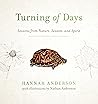
Book Review- Turning of Days by Hannah Anderson


Turning of Days: Lessons from Nature, Season, and SpiritTurning of Days: Lessons from Nature, Season, and Spirit by Hannah Anderson
My rating: 4 of 5 stars

Thomas Henry Huxley wrote, “To a person uninstructed in natural history, his country or seaside stroll is a walk through a gallery filled with wonderful works of art nine-tenths of which have their faces turned to the wall.” An all too true statement about most of us, excepting children whose innate curiosity beckons them to run around to peer into the artworks’ faces. Fortunately for the rest of us, Hannah Anderson and her husband Nathan, illustrator of her new book, Turning of Days: Lessons from Nature, Season, and Spirit stand in the gap between nature and nature’s God pointing us to both. They offer seasonal lessons of what it looks like to turn our faces to the works of goodness, beauty and truth in nature given to us by our Creator and reveal more about Him and ourselves than we are aware.
This collection of essays of her observations of nature and theological connections is ordered around the seasons. You will learn about spring peepers, pruning, and hawks’ migration habits. You will read of God’s providence, memento mori, and kronos, the fulfillment of time. You will see detail illustrations showing the same attentiveness.
In an online conversation with Hannah, she writes that she and Nathan have “shared a particular disposition or awareness of [the] natural world.” I share this disposition due in large part to spending much of my childhood exploring the woodlands, creeks, and streams that bordered my home and to a church that offered me a chance to read and learn much of the Bible. The connections come somewhat naturally when you watch a hawk soaring over an open field and then read in Scripture about “rising up on eagles wings”. Fortunately for us throughout the book she models for us how to learn more about what we see and to read the Bible with those observations in mind. In a final essay she gives suggestions how to place our ourselves, so our attention is directed to observe nature well. We will not learn this disposition if we will not place ourselves as creature among creation willing to submit to its teaching.

I received a copy of the book for an honest review.

View all my reviews

Friday, January 22, 2021

Prayer in the Night

Prayer in the Night: For Those Who Work or Watch or WeepPrayer in the Night: For Those Who Work or Watch or Weep by Tish Harrison Warren


“What I most love about this line—’and give hour angels charge over those who sleep’—is that it pulls together supernatural cosmic strangeness and the most quotidian of human activities: sleeping.” With that, and other carefully chosen words, Tish Harrison Warren proves once again in Prayer in the Night that she is a master of revealing glimpses of how our lives in the temporal sphere meet the eternal one.
In her opening note she tells us that wisdom is a “slow work”, and it is. Painfully so at various times and in various relationships in our lives. To guide us through this slow work, she walks us through the Prayer at Compline in The Book of Common Prayer:

Keep watch, dear Lord, with those who work, or watch,
or weep this night, and give your angels charge over
those who sleep. Tend the sick, Lord Christ; give rest to
the weary, bless the dying, soothe the suffering, pity the
afflicted, shield the joyous; and all for your love's sake.
Amen.

She helps us to see how prayer and faith are related; “Faith, I’ve come to believe, is more craft than feeling. And prayer is our chief practice in the craft.” With each phrase or word of the prayer, she reminds us to whom we pray, of his goodness toward those for whom we pray, including ourselves, and our work that proceeds from this prayer. Works of belief, rest, struggle, as well as justice and mercy.

I could have, and practically did, underline the entire chapter, “Shield the Joyous”. I tend to see the dark and twisty side of life too easily. I practice pessimism as naturally as a child is afraid of the dark. To petition my Creator to “shield the joyous”, feels foreign to me. The other shoe always seems to drop and who am I to get out of its way. But I miss the mark when I practice my faith this way. I miss “intentionally and habitually open[ing] [my]self to God’s unconditional love…and practice living in the reality that his love is deeper and more substantial than any need we could present to God.” The practice of joy and asking for it to be shielded “is a vulnerable and courageous choice.” It is the slow work of wisdom. Warren reminds me not only who I am, His Beloved, and that I can pray this petition, but the loving Father of whom I am asking.

As with Liturgy of the Ordinary, Prayer in the Night is a book to be read both in one gulp and then re-read slowly, thoughtfully and practiced. This is the first book I’ve read in 2021. I look forward to re-reading this throughout the year with pen and notebook in hand.

I received an ARC from the publisher.


View all my reviews

Thursday, December 31, 2020

Jesus the Great Philosopher: Rediscovering the Wisdom Needed for the Good Life


I saved the best for last. In the last days of 2020, I began reading Jesus the Great Philosopher: Rediscovering the Wisdom Needed for the Good Life by Dr. Jonathan Pennington, Associate Professor of New Testament Interpretation and Director of Research Doctoral Studies at Southern Baptist Theological Seminary. This is a book I have wanted to read since the Fall of 1979 when I took Philosophy 101 at a small Christian college in Nashville, TN. I loved the class and the professor, but never knew how to connect my love of philosophy with living. After all, I had the Bible, right? Never mind trying to meld philosophy and theology. This was an error on my part because my philosophy professor was also a systematic theologian and the one who wrote the systematic theology for our denomination. He was also my advisor and would have gladly helped me to understand. Thankfully, Dr. Pennington filled that role.

In Jesus the Great Philosopher: Rediscovering the Wisdom Needed for the Good Life, Dr. Pennington explains what philosophy is, what philosophers do, and how that has changed over the centuries. He also shows philosophical ideas of the Bible, and how and why early Christians would have considered Jesus a philosopher. The remainder of the book covers topics of life ancient philosophers would have taught and encouraged their followers to learn and to live out: educating emotions, restoring relationships, happiness, and human flourishing. He then discusses these topics in philosophical light of what the Christian Bible, and specifically Jesus Christ taught.

One of the most helpful aspects of this structure, and the entire book, is to reveal to us where some of our philosophies and practices of life originated and how they pervade our thinking and living without our conscious acknowledgement. More helpful is his explanations of how Christianity, rightly understood, can correct our thinking and practices.

The key theme, and I would argue its most important, throughout the book is living in hope, but not “baptized optimism.” “Hope is a virtue to be cultivated. Hope is a virtue of the will that can teach us to embrace both hardships and joys, because it is more than a mere emotion.” Pennington uses the topics above to express why and how we can cultivate this hope and why it is necessary.

Clearly this is a book for our times. 2020 has tested the best in and of us and in some ways, we have been found wanting. I wish the book had been available earlier in the year, but faith in God’s timing is well placed and as Dr. Pennington explains having faith is to hope.

While this is my last book of 2020 to read, it will go with me into 2021 as I re-read it. He answered my question about how philosophy, theology and living work together, but more importantly specific questions this book raised will be answered more slowly as I examine my own life and cultivate hope.

This is the one book for 2020 that I can recommend heartily and will be giving away to others.

I received an ARC of this book from the publisher.

Monday, February 03, 2020

Handle with Care: How Jesus Redeems the Power of Touch in Life and MinistryHandle with Care: How Jesus Redeems the Power of Touch in Life and Ministry by Lore Ferguson Wilbert
My rating: 4 of 5 stars

In Handle with Care, Lore has written a helpful introduction to what essentially is a theology of touch. She offers us a well-reasoned and well-written book inviting us to re-consider the implications of past ideas and practices regarding touch by closely examining the practices of Jesus as he interacted with those around him.
By providing historical background, which includes the “me, too” and purity culture movements, offering categories of touch, which include definitions of healthy and unhealthy platonic, sexual , and professional touch, she sets the context for the remainder of the book. While offering few specifics and rules, she does offer two concepts that undergird her thesis. First, we are to consider the person in front of us and second, we need to see others as subjects of the kingdom, not objects of our worship. Although the latter was specific to her discussion of marriage, this very helpful framework is throughout the book.
As is sometimes the case, I happened on an example of what Lore writes about Handle with Care in the recent movie adaptation of Little Women. Throughout this movie, Greta Gerwig and the actors provide scene after scene of how touch is used to show affection, provide comfort, serve, fight, create and more. I finished the book a few days before seeing the movie. Each enhanced my understanding of the other.
I will gladly and without reservation recommend this book to many of my friends. I can see how it concepts could be helpful to many in healthcare, education, and church professions. But more so, I hope that we all reconsider how we use touch and be willing to examine and change our practices with our friends and family.


I received an Advanced Reader's Copy of the book from the publisher.


View all my reviews

Handle with Care

In Handle with Care, Lore has written a helpful introduction to what essentially is a theology of touch.   She offers us a well-reasoned and well-written book inviting us to re-consider the implications of past ideas and practices regarding touch by closely examining the practices of Jesus as he interacted with those around him. 

By providing historical background, which includes the “me, too” and purity culture movements, offering categories of touch, which include definitions of healthy and unhealthy platonic, sexual , and profession touch, she sets the context for the remainder of the book. While offering few specifics and rules, she does offer two concepts that undergird her thesis. First, we are to consider the person in front of us and second, we need to see others as subjects of the kingdom, not objects of our worship. Although the latter was specific to her discussion of marriage, this very helpful framework is throughout the book. 

As is sometimes the case, I happened on an example of what Lore writes about Handle with Care in the recent movie adaptation of Little Women. Throughout this movie, Greta Gerwig and the actors provide scene after scene of how touch is used to show affection, provide comfort, serve, fight, create and more. I finished the book a few days before seeing the movie. Each enhanced my understanding of the other. 

I will gladly and without reservation recommend this book to many of my friends. I can see how it concepts could be helpful to many in healthcare, education, and church professions. But more so, I hope that we all reconsider how we use touch and be willing to examine and change our practices with our friends and family. 

Thursday, December 21, 2017

Loose strings and tight knots

The year is coming to a close and I am tying up a few loose strings and untying a few knots. One loose string is posting my reviews of some of the books I have read this year. So here are a fair number of them. As I look over this list, two stand out. Liturgy of the Ordinary: Sacred Practices in Everyday Life and Hidden Figures: The American Dream and the Untold Story of the Black Women Mathematicians Who Helped Win the Space Race

I plan to use Liturgy of the Ordinary, along with a few other sources, to set up practices and disciplines that I hope will help me in attending to my faith in a more consistent pattern which I hope will begin to develop practices I can use throughout my life to shape my life and faith and remind me of the very Good God, who loves me.

Hidden Figures. What an incredibly inspiring book to read at this time in history. Women who took advantage of every opportunity, dealt with racial and gender discrimination with character, poise, and determination, and did it all while enjoy and appreciating the good that life has to offer. A lesson I hope to take with me into this new year and use as wisely as they did.

I would be interested in hearing what others have read this year and what you would recommend as well.

  
A Grief Observed

Listened to this while driving during a trip. Lewis, honest and raw, shows us the value of wrestling with doubts, fears, and overwhelming emotions that threaten to sink us at times. While a book primarily about his grief from losing his wife, I found parts of it invaluable in dealing with other losses. Narrator is Ralph Cosham.


A Christmas Carol
This is the edition that I listened to this year. Well done!


To Be Where You Are (Mitford Years #14)

The title says it all. Be all in where you are, with those you are with. No flash, no spin, just live the quiet life with joy.


The Tech-Wise Family: Everyday Steps for Putting Technology in Its Proper Place

Finished this awhile back. What I appreciate most about Andy Crouch's writings is his ability to frame questions about the issues of the time we live in. Asking the proper questions, and knowing how to do that, is crucial to our ability to then think well about those issues. He does so in this his latest work and I found myself making some changes to how I approach and use technology. It was also a pleasure to attend his talk on this subject in my local city. His fleshing out (literally...we participated in some of the activities presented in the book) added to the book and I do wish he would continue to present in that manner.

The Grace of Dogs: A Boy, a Black Lab, and a Father's Search for the Canine Soul

Thoughtful, engaging book on the shaping influence relationships with dogs can have on their owners. I could see better how my dog, Samwise, has shaped me for the better because of his patient faithfulness to me.
Update: after entering quotes into my commonplace book, I realize this book, in many ways, is also a theological anthropology. He presents a view of man and his ways of relating based in imago Dei. Setting aside the book for a short time before I entered quotes allowed me to realize how subtly this book has challenged me to examine beliefs that I truly hold to that may or may not be rooted in a sound theology or that I thought I held to but in practice have failed miserable. This has been both a pleasant surprise and a rude awakening.

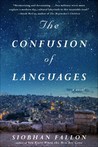
The Confusion of Languages

More to come later. This is a remarkable book on several levels. Her characters are well portrayed, especially their interior life. Her exploration of how our thoughts can provide motivation for our emotions and actions, and vice versa, the way language (especially defintions) can influence those, and the enormous effort it takes to recognize it all has left me mulling over this work.


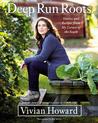
Deep Run Roots: Stories and Recipes from My Corner of the South

After watching a few of her episodes of A Chef's Life, I borrowed her cookbook from the library. She is a storyteller. I enjoyed reading more of her experiences as she came to enjoy and appreciate her East Carolina roots, food, family, and traditions. Gathered recipes to try and continued to enjoy this twist on cookbooks that serve up good food and incorporate storytelling in the mix.


Portraits of Courage: A Commander in Chief's Tribute to America's Warriors

This is a remarkable book. President George W. Bush fills this book with portraits he painted of wounded veterans from Iraq and Afghanistan wars. He highlights the individual stories of those soldiers included in the book using his plain-spoken style and occasional dry wit he is known for. One more note, many of those whose stories are include here speak of their healing being a life-long journey they have embraced. Most cite the love of family, faith, medical care, and exercise as key components in their recovery. And as the author mentions several times the soldiers courage played no small part as well. Think this will be my Dad's Birthday present this year.

How to Hygge: The Nordic Secrets to a Happy Life

I read this out of curiosity about the trend of hygge. An interesting peek into Nordic lifestyle. However, from this author's representation, nothing that I haven't read before from Charlotte Mason, Edith Schaeffer, Amish officiandos, etc. At the core is a lifestyle centered around keeping simple the activities of nature and outdoor living , food and hospitality, family and friends with an eye to enjoyment of the good gifts of life.


Hidden Figures: The American Dream and the Untold Story of the Black Women Mathematicians Who Helped Win the Space Race

As someone who grew up during the early stages of the space race, I was enamored with all things NASA. So much so that the first thing that I ever earned money for was a book produced by the Gulf Oil company about the Apollo 13 space mission. I remember going with my dad to get the book from Bubba McCoy's gas station one morning before school and it was worth every penny. I wonder what happened to that book. So it's no surprise that I enjoyed this well-written, well-researched account of the role of African American women in NACA AND NASA. It was captivating. The author writes in the style of David McCullough and easily kept my interest. These women succeeded facing all manner of prejudices and other odds against them not just because of their intelligence and tenacity but due to a sense of accomplishing something bigger than themselves. And they loved mathematics, who would argue with that?

Barbara Bush: A Memoir

I loved reading her memories and thoughts about so much of the history that I remember. She is a remarkable woman who clearly loved and served with all she has. This was the third year in a row that I read about the Bush family and this coming year will be no exception. Decision Points by her son is waiting in the stacks for the 2018 New Year's Day.


Liturgy of the Ordinary: Sacred Practices in Everyday Life

This will easily be one of my top 5 books of the year. A much needed, well written apology and description of the ways liturgy can shape us as the people of God if given both the mental and willful assent that we often subconsciously give to the other habits. Recommended by James K. A. Smith, whose _You Are What You Love_ and Cultural Liturgies trilogy I hope to finish this year.


The Girl with Seven Names: A North Korean Defector’s Story

Thanks to the audio version, traveling and cleaning this week were not tedious and I was able to finish this quickly. The story and narrator easily kept my interest. She tells her story with an eye to both the beauty and corruption of human nature. Her's is a story of perseverance. more to come later


The Lord of the Rings (The Lord of the Rings, #1-3)

This is a yearly re-read for me. I can take it slow and enjoy the writing, which is satisfying.


Tuesday, July 18, 2017


Hope Heals: A True Story of Overwhelming Loss and an Overcoming Love


Hope Heals: A True Story of Overwhelming Loss and an Overcoming Love by Katherine Wolf
My rating: 3 of 5 stars

A poignant tale from a couple who have faced great suffering and have learned to walk in it because of the faith and trust they have chosen to place in God who wounds and gives life out of that suffering. Highly recommended.

View all my reviews

Wednesday, May 20, 2015

Nine Tailors by Dorothy Sayers

The Nine TailorsThe Nine Tailors by Dorothy L. Sayers
My rating: 5 of 5 stars

“So I think I'd better go, said Wimsey. "I rather wish I hadn't come buttin' into this. Some things may be better left alone, don't you think? My sympathies are all in the wrong place and I don't like it. I know all about not doing evil tha good may come. I'ts doin' good that evil may come that is so embarrassin'."
"My dear boy," said the Rector, "it does not do for us to take too much thought for the morrow. It is better to follow the truth and leave the results in the hand of God. He can forsee where we cannot, because He knows all the facts.”


It was with this quote that I understood why Sayers designed such an "easy" mystery and places this book on my re-read list. I knew fairly early on the identity of the corpse, but continued reading to see why she would craft the story so and to see where she was taking me.  She took me to a community that cares for its own, and to the church that stands high on a hill, whose ringing bells bring joy, comfort, and alarm in times of need. This church provided shelter during a flood and ensuing tragedy which occurs when warnings are ignored. I hear clearly echoes of the Old Testament story of Noah. In all of this, by crafting several sub-plots, she asks me to consider that the ways of our Lord are indeed the mystery bringing both sorrow and joy, sometimes with a paradoxical comfort that comes from leaving "the results in the hand of God."  Masterly and subtly crafted, it is well worth re-reading.


View all my reviews

Thursday, July 05, 2012

Charlotte's Web


What does a fifty plus year old post-menopausal brain need as bedtime reading? Children's literature, of course. Taking C.S. Lewis at his word that “A children's story that can only be enjoyed by children is not a good children's story in the slightest”, I added children's stories to my bedside reading table, as there are times in life when even the most trivial adult or young adult novel would give me too much to consider and sleep would not come.
One of my recent favorites has been Charlotte's Web by E.B. White. While I started off reading, I soon switched to the the audio version read by the author himself. Perfection. A reader (listener) can know without a doubt what Mr. White wanted us to hear about life, death, friendship, living, and growing up and older by the gentle inflection of his voice. His impressions of the animals in the barnyard speaking is worth the price of the CD's alone. But don't take just my word for it, you can listen for yourself in the embedded audio below. And for those who simply can't wait you can purchase the audio from Audible and have it before bedtime tonight.

Monday, January 17, 2011

Time and Grace


One Thousand Gifts: A Dare to Live Fully, Right Where You Are
 

“I watch the hands move grace on the clock face. I’m growing older. These children growing up. But time is not running out. This day is not a sieve, losing time. With each passing minute, each passing year, there’s this deepening awareness that I am filling time, gaining time. We stand on the brink of eternity.”~ Ann Voskamp

Monday, May 19, 2008

Postmodernism


Richard Appignanesi and Christ Garratt’s Introducing Postmodernism, is probably the most difficult and frustrating book I have read. The concepts, to some extent, are foreign to me, a 47 year old white evangelical mother of two teenagers daughters and required what a good novel demands, a willingness to suspend disbelief until the author has had his say. All in all a good exercise for me- it pushed me to understand something outside of my usual purview and to dig deeper for the truths buried there. The underlying theme of postmodernism, or hypermodernism, as I believe it is most accurately labeled, is the Ideal of the Enlightenment/Modernity taken to its logical and natural conclusion. If Descartes’ first principle is “I think, therefore I am” then hypermodernity first principle is “I am”. Two parts of the book that illustrate this vividly for me were the four successive historic phases that representational image-sign (art) goes through as posited by Jean Baudrillard and it’s application to the development of the theory of Virtual Reality. Using various images of shoes as portrayed in history to illustrate how shoes have progressed from an object designed for work, our God-given task not incidentally, becomes an image product that becomes a substitute for the image of God that we are called to bear. This Virtual Reality, along with its driving forces of free market capital-fed consumerism and pathological bent toward disbelief predicated not on knowledge but deceit and fraud brings us to a point of where we begin “ the demolition of the past” in order to prepare for “the coming of the artificially engineered human”. We move from being the steward to producer to the consumer to becoming the product. And in doing so lose our humanity, all in the name of creating our own reality. This book did help me to understand much better C. S. Lewis’ prophetic warning of this predicament in his work Abolition of Man and in That Hideous Strength in which he masterfully clothes his prophecy. So we have arrived at this point isolated from one another and less human for a number of reasons not the least of which is a commitment to not cooperate with Reality. By trying to rip our lives from Reality we end up not with Nihilism but with Absurdity. We have, as far as we are capable, tried to create some reality that has no mooring due to an insistence on rejecting what has come before, both tradition and revelation. Which make the author’s suggestion of remedy for this loss of reality all the more ironic. They call for a return to romanticism, a movement that looked to man’s heightened experiences and elevation of nature’s healing balm to provide that mooring that is lost. Man’s answer to the virtually reality he has tried to create is to go back to an era of real experiences.
C. S. Lewis also gives us a better antidote to hypermodernity than a return to romanticism. He states of the Tao (First principle; general revelation), “as long as we remain within it, we find concrete reality in which to participate is to be truly human: the real common will and common reason of humanity alive, and growing like a tree, and branching out, as the situation varies into ever new beauties and dignities of application.” But make no mistake this Tao is not an abstraction; it is the very character of God as evidence in both the created universe and his chosen image bearers, man. And its fullest expression possible is seen when believers love one another and others in a self-sacrificial manner.
What has amazed me most about reading and thinking about this book is that I was able to learn from it. It was humbling to go from complete frustration with this book to having to admit that it did help me to see how others could view life and make choices. My oldest daughter tells me that, indeed, people her age are all about experience and knowing that helps me to be much more patient with their searching and more focused in ways to minister to them.

Monday, October 08, 2007

In light of...

Just a note to let you know that Teaching Redemptively, the book I referenced below, has been read in light of the following books. I hope to post more on how all of the books I've listed so far have woven together so profoundly that I'm a bit at a loss for words, expect to say that how we live influences greatly our understanding. Put that together with yesterday's sermon and I need some time to think it through more fully.

Longing to Know


Proper Confidence: Faith, Doubt, and Certainty in Christian Discipleship


Creation Regained: Biblical Basics for a Reformational Worldview

Sunday, October 07, 2007

Teaching Redemptively..... and living so.


I think I have found a book to place all the other books I've been reading on teaching and learning... and living into a context. A kingdom of God context to be specific.

A little taste, "...truth and knowledge are not isolated entities; they exist in relationship to God, their author. God's actions are an outworking of His nature. Even though He is separate from His work of creation, it means something only in relationship to Him. Thus, it seems logical to think that knowledge in a biblical sense exists only in a relationship, the dynamic relationship between knower and the known."

and a little more

"The Old Testament Israelites grew in knowledge as they listened to God's proclamations, committed themselves to them, and then lived according to them. The process of doing something with the information they were acquiring actually contributed to the further development of their knowledge. ...In part, they were formed by their concrete acts. ...Doing was not only the obvious result of knowing but a part of the process of coming to know. "

I am also grateful that the author has listed his references; at this rate I should be finished reading about teaching and learning....about the time my grandkids graduate from college.